
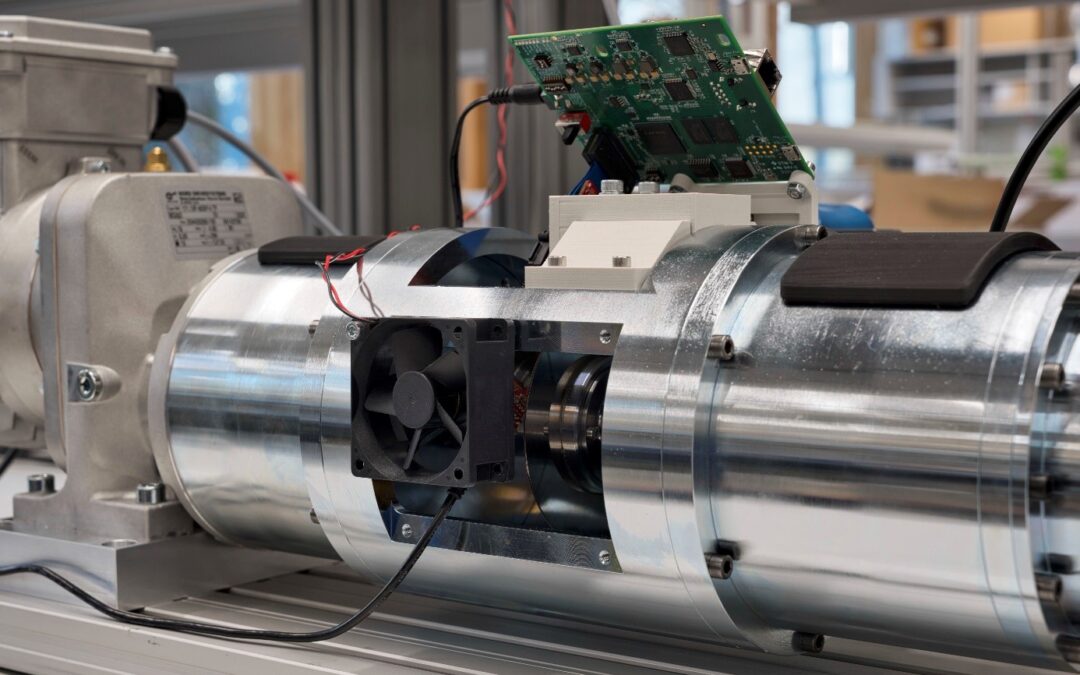
The Institute of Electrical Measurement and Sensor Systems of the Graz University of Technology is working on the development of a novel torque sensing idea within the SC3: Precise Measurements for Efficient, Reliable and Safe Electric Powertrains in Transportation of the Cynergy4MIE Project.

When designing torque sensors for automotive applications, several factors like accuracy, durability, size, and weight need to be considered. However, today’s sensor types are limited and do not fully cover the requirements. Main points of limitations are: 

  • Vulnerable to magnetic fields
  • Signal must be harvested from rotating shaft
  • Contactless solutions are complex and expensive

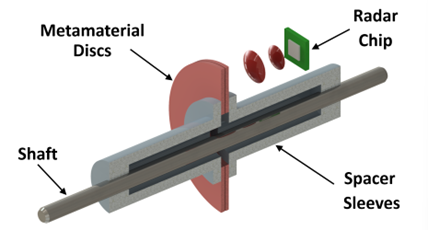
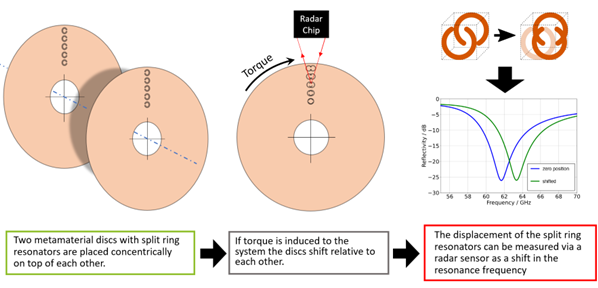
The concept of a millimetre-wave (mm-wave) based torque sensor aims to overcome these limitations. This new idea for torque measurement consists of using tuneable millimetre-wave metamaterial targets in connection with a radar sensor chip as read out. It works by mechanically translating torque in a relative rotational displacement between two metamaterial discs, which are mounted on a shaft via spacer sleeves.

The torque-induced displacement shifts the metamaterial’s resonance frequency, which can be detected by a radar chip. By continuously tracking the resonance minimum and its shift under applied torque, the system enables contactless torque measurement.
After successful static tests, a testbench is built to enable the research and development of this technology in a dynamic rotating environment. The test bench consists of two electric motors to apply load to a shaft, a section where the experimental sensor is mounted, and a calibrated torque measuring shaft.
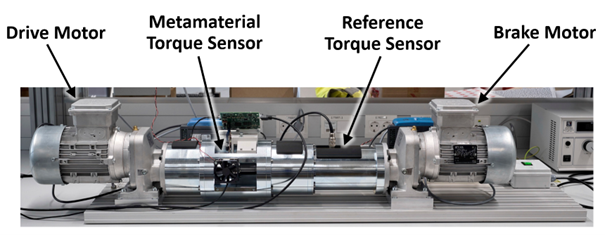
With this test set-up the following aspects will be investigated within the Cynergy4MIE project to further develop this torque sensing concept:

  • Testing different metamaterial discs
  • Testing different radar sensors
  • Improve the signal processing
  • Investigate the effects of cross-sensitivities

Blog signed by: TUG team