Some of the most powerful information around us moves quietly through walls, machines, and everyday spaces. Tiny variations in magnetic fields carry information about how systems behave, where we are, and what is happening beneath the surface. For years, these signals have remained largely out of reach. Today, a new generation of researchers at the Institute of Electronics and Computer Science (EDI) in Latvia is working to turn these invisible signals into something we can actually use. The story unfolding today feels very much about the future, something that fits not just in a lab, but in real systems, devices, and environments.

Their focus is on quantum sensing. Not in the abstract sense, but in a very tangible way: building sensors that can detect incredibly small changes in magnetic fields, even at room temperature. It all begins with a tiny imperfection in a diamond. Inside specially engineered diamonds, there are defects known as nitrogen-vacancy centres. These tiny structures respond to magnetic fields in a way that can be measured with remarkable precision. What makes this special is not just the sensitivity, it’s the possibility. A sensor like this could help locate objects indoors where GPS fails, reveal hidden structures in buildings, or even monitor how machines behave in real time.

Turning this idea into something usable is not simple. The first working prototype at EDI proved that the concept works. It combined lasers, electronics, and software into a single system that could detect and interpret magnetic signals. It was also clear that this was only the beginning. The system was complex, with many parts that needed to work together seamlessly. As the team pushed forward, they faced a familiar challenge in advanced research: how do you move from a working experiment to something reliable, scalable, and practical?

The answer led them in a new direction. To make the system more flexible and future-ready, the team began developing a second prototype built around a more adaptable architecture. At its core, there will be a RISC-V processor, helping coordinate everything happening inside the sensor. Instead of treating each part of the system separately, this new approach allows everything to work together more smoothly, like an orchestra following the same rhythm. It also opens the door to something bigger: sensors that are not just precise, but also efficient, compact, and ready for wider use.

What makes this story especially compelling is where the technology is going next. In one experiment, the team brought the sensor into an indoor environment to explore how magnetic fields change across space. Using a robot and a precise positioning system, they collected data point by point. At one moment, something unexpected appeared: a small anomaly in the magnetic field. It turned out to be caused by a structural element in the building. Something invisible, quietly shaping the environment, suddenly became visible through data.

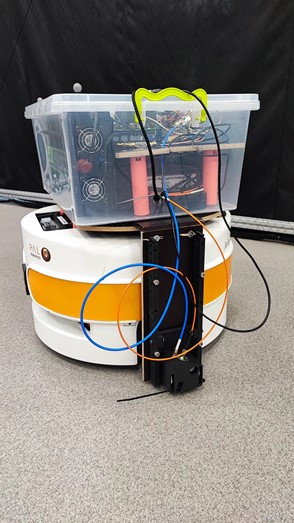
Sensor integrated onto rover for magnetic field mapping
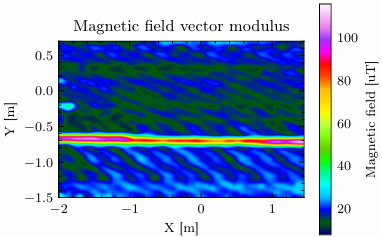
Collected data showing  a small anomaly in the magnetic field

Construction plans showing rebar beam placement

In another experiment, the sensor was placed inside a motor. This was not an easy task. It required careful integration and the ability to measure extremely fast changes. But the result was striking. The sensor could track the motor’s behaviour in real time, opening possibilities for smarter control, diagnostics, and maintenance.

These moments show what quantum sensing can become, not just a laboratory achievement, but a tool for understanding the world in new ways. This work is part of the Cynergy4MIE project, which aims to bring together technologies across energy, mobility, and infrastructure. As highlighted in the project, one of the biggest challenges today is that innovations often happen in isolation. Different fields move forward separately, even when they could benefit from each other. Cynergy4MIE takes a different approach, connecting technologies, people, and ideas to create systems that are more integrated and impactful. EDI’s work fits naturally into this vision, helping translate deep scientific knowledge into something that can be shared, applied, and scaled. The team continues to refine the sensor, making it smaller, faster, and easier to use. The goal is not just to improve performance, but to make the technology accessible and ready for real-world challenges.

As part of this journey, the project will also be present at the RISC-V Summit Europe, where ideas, technologies, and communities come together. It’s another step in connecting this work with a broader ecosystem and exploring what comes next.

In the end, this is a story about perception. About learning to detect what was once invisible. About turning subtle signals into meaningful insights, about the long path from an idea to something that can shape everyday life.

Sometimes, innovation doesn’t start with something new.

Sometimes, it starts with learning to see what was always there.
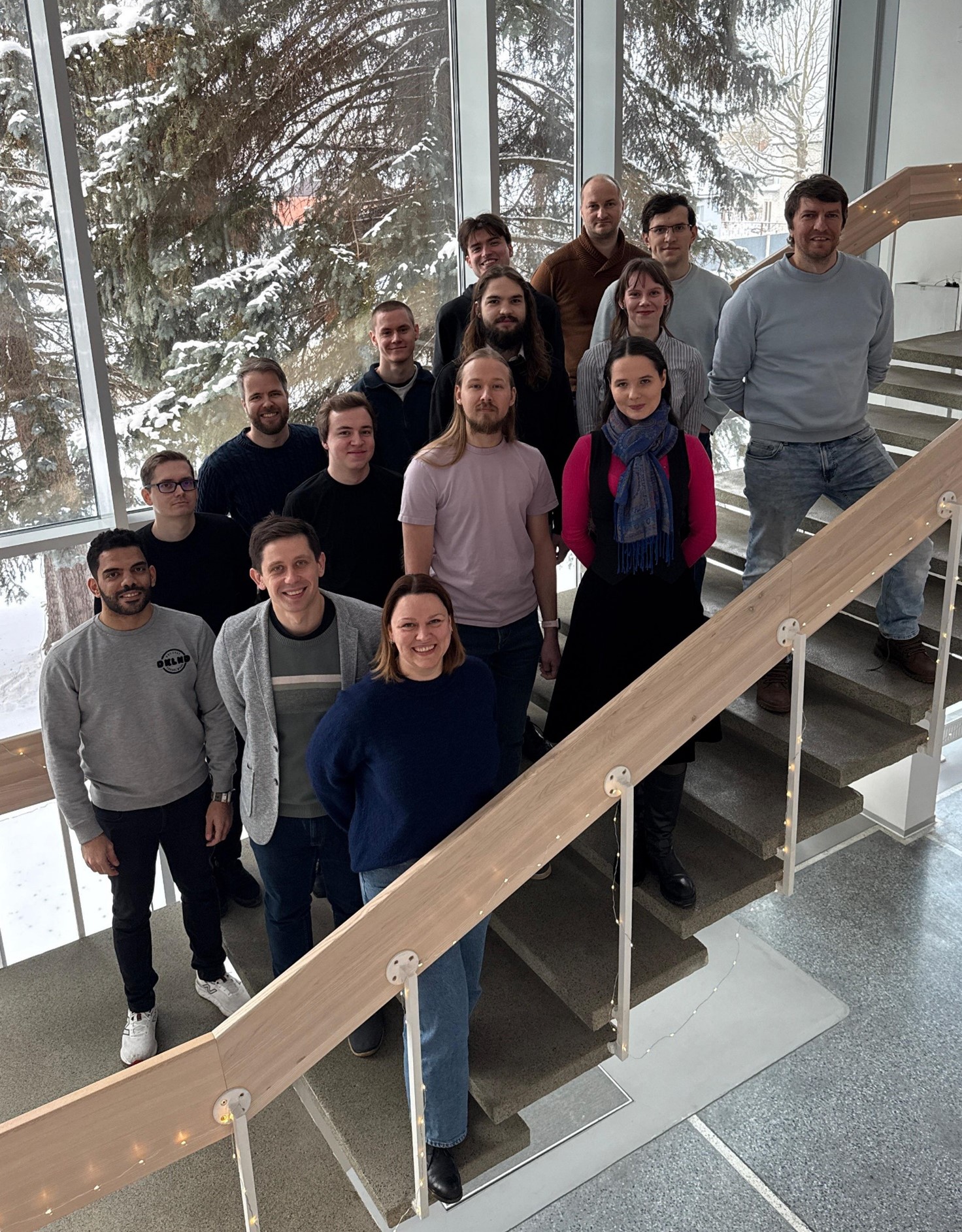
Blog signed by: EDI team