
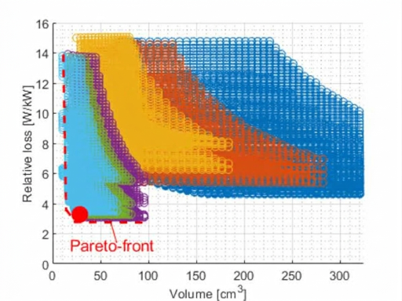
Figure 1: Optimization study used to identify the most efficient and compact charger design.
To find the best solution, a large number of design alternatives were evaluated and compared. This enabled the identification of a converter architecture that offers an attractive balance between compact size and low energy losses.
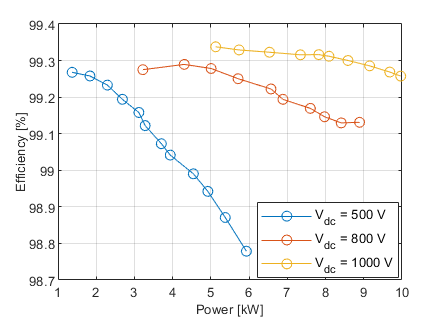
Figure 2: Efficiency of the proposed converter across a wide range of operating conditions.
The resulting design demonstrated excellent performance. Across the voltage range relevant for both current and future EV battery systems, the converter maintained efficiencies above 99%, with a peak efficiency of 99.4% at 10 kW. In practical terms, this means that only a very small fraction of the energy is lost during charging.
These results demonstrate the potential of gallium nitride (GaN) technology to enable highly efficient and flexible charging systems. Such technologies can help make future charging infrastructure more adaptable, supporting both today’s EVs and future vehicles equipped with high-voltage battery systems.
Blog signed by: TUe team